
A Better Water System Begins With the Details That Matter
Most homeowners don’t think much about their water when everything seems fine. The faucet runs, the shower feels good, the coffee tastes normal, and the dishwasher does its thing. Water is simply there.
Then something changes.
Maybe the shower door starts collecting white scale. Perhaps the kitchen water develops an odd taste, or a filter that used to last for months suddenly seems clogged within weeks. These aren’t always major problems, but they’re signs worth paying attention to.
The tricky part is knowing what to do next. There are countless water filters, softeners, purification systems, and treatment products on the market. Some are excellent. Others may be completely unnecessary for a particular home.
A better approach is to start with the water itself, understand what needs attention, and build a treatment strategy around real conditions.
Know What You’re Trying to Fix
Water treatment works best when there’s a clear reason behind it.
Hardness can create scale on faucets and inside appliances. Sediment can cause cloudy water or clog fixtures. Iron may leave orange or reddish staining. Certain dissolved substances can affect taste or require more specialized treatment.
The first step is often testing.
A water analysis can reveal characteristics that aren’t obvious by looking at a glass of water. Depending on the source, homeowners may test for hardness, pH, iron, manganese, chlorine, sediment, bacteria, nitrates, and other relevant parameters.
This is especially useful for private wells, where water chemistry can vary with local geology and environmental conditions.
It also prevents the classic mistake of buying a system because a neighbor recommended it. Your neighbor’s water isn’t necessarily your water.
Related resource: Making Tap Water More Enjoyable Without Overcomplicating It
Installation Is More Than Connecting Pipes
Good equipment can still perform badly if it isn’t installed with the household’s actual needs in mind.
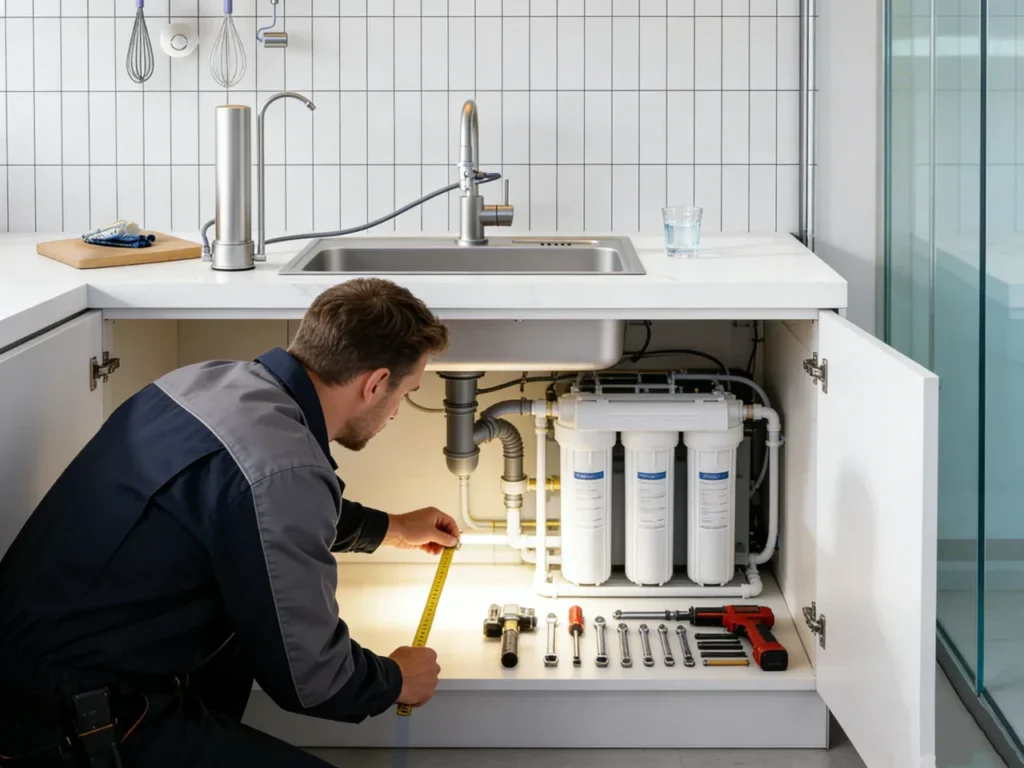
Water system installation should consider flow rate, incoming pressure, pipe size, drainage, electrical requirements, equipment location, and access for future servicing.
Imagine a family with three bathrooms and several high-flow fixtures. A system that works perfectly during a quiet afternoon may struggle when everyone is getting ready for school and work.
Peak demand matters.
So does maintenance access. Filters need changing. Valves need inspection. Salt tanks may need attention. If the equipment is squeezed into a dark corner behind storage boxes, routine maintenance becomes much less appealing.
A good installation doesn’t just make the system work today. It makes it practical to own tomorrow.
Drinking Water May Need a Different Approach
Whole-home treatment and drinking-water treatment aren’t always the same thing.
Some homeowners want to improve water throughout the property, while others are primarily concerned with the water they drink and use for cooking.
Drinking water filtration can provide targeted treatment at a kitchen faucet, refrigerator, or other point of use. Depending on the technology, filtration may improve taste and odor or reduce certain substances from the water.
Reverse osmosis is one common option for reducing many dissolved substances. Carbon filtration is another approach that can be useful for certain taste, odor, and chlorine concerns.
The important part is matching the technology to the goal.
Related resource: Understanding Iron, Sulfur, and Sediment in Well Water
A filter shouldn’t be selected simply because the box says “advanced.” Look at what it is actually designed to reduce and whether the manufacturer’s performance claims are supported by appropriate testing or certification.
Hard Water Is Usually a Long Game
Hard water doesn’t normally cause an overnight disaster. Instead, it creates little annoyances that slowly become part of the household routine.
There’s the cloudy glassware. The white ring around the faucet. The showerhead that looks older than the rest of the bathroom. Then there’s mineral buildup inside appliances that heat water.
Calcium and magnesium are the primary minerals responsible for hardness.
A properly sized softener can reduce those minerals and help control scale. But softening shouldn’t be confused with general filtration. If testing also identifies iron, sediment, or an odor issue, other treatment may be necessary.
The best system isn’t necessarily the one with the most stages. It’s the one where every stage has a job.
Pay Attention to Changes in Filter Performance
Filters can be surprisingly good indicators of what’s happening in the water supply.
If a filter normally lasts six months and suddenly becomes heavily loaded in six weeks, something has changed. Maybe there’s more sediment entering the home. Perhaps work was done on the plumbing. In a private-well system, weather or groundwater conditions could be involved.
Simply replacing the filter may restore flow, but it doesn’t explain the reason for the change.
That’s why filter maintenance should include observation, not just replacement.
Look at the old cartridge before throwing it away. Is it covered in fine sediment? Is there unusual discoloration? Does it look dramatically different from the previous one?
Related resource: Strange Smells and Cloudy Water: What Your Well Might Be Trying to Tell You
Those small details can provide useful clues.
Upgrades Should Solve a Real Problem
Water treatment technology continues to improve, and newer systems may offer better controls, monitoring, efficiency, or convenience.
But “newer” doesn’t automatically mean “better for your home.”
Filter replacements & upgrades make the most sense when there’s a specific reason for the change. Perhaps your household has grown. Water usage has increased. The source water has changed. Replacement cartridges are becoming difficult to find. Or the existing equipment simply isn’t keeping up.
Before upgrading, ask what isn’t working.
If the issue is only a clogged cartridge, replacing the entire system may be excessive. If the system is consistently undersized or no longer appropriate for the water chemistry, an upgrade may be justified.
The answer should follow the problem.
Don’t Forget Water Pressure
Pressure problems often get blamed on treatment equipment, but the actual cause may be somewhere else.
A clogged filter can certainly restrict flow. So can a partially closed valve, failing pressure regulator, plumbing restriction, or leak.
Try to identify the pattern.
If pressure is low throughout the house, the issue may be broader than filtration. If pressure is normal before the treatment system but drops afterward, the equipment deserves closer inspection.
Related resource: A Closer Look at the Small Details Behind Better Drinking Water
This is another reason installation and maintenance records are useful. Knowing when the system was installed and when components were replaced can help narrow down potential causes.
Private Wells Need Extra Attention
Homes using private wells have another factor to consider: the water source itself.
Groundwater conditions can change after heavy rain, flooding, construction, or changes in drainage around the property. A sudden change in taste, odor, color, or sediment shouldn’t simply be dismissed as a filter issue.
The wellhead should also be kept in good condition, with appropriate drainage and protection from surface contamination.
Treatment equipment can improve water quality, but it can’t compensate indefinitely for a compromised source.
Maintenance Is Part of Ownership
Every treatment system needs some level of care.
Filters need replacement. Softener systems require attention to salt and settings. Reverse osmosis membranes eventually need servicing. Specialized treatment media has a useful life too.
Set reminders rather than relying on memory.
A simple note on your phone with filter-change dates can be enough. Keep records of professional service and water tests as well.
If something suddenly changes, that history can make troubleshooting much easier.
Don’t Chase Perfect Water
It’s easy to get caught up in the idea that better water means removing absolutely everything.
Related resource: What Your Drinking Water Is Telling You About Its Quality
That’s not necessarily the goal.
Water treatment should address legitimate concerns while fitting the household’s budget, plumbing, water usage, and maintenance habits.
A homeowner with mild hardness may need a straightforward solution. Another property with well water, sediment, iron, and odor may need multiple treatment stages.
Neither setup is inherently better.
The right one is the one that makes sense.
Let the System Become Background Noise
The best water-treatment equipment is almost boring.
You don’t think about it every time you open the faucet. You don’t constantly scrub scale from fixtures. You don’t wonder why the coffee tastes different every morning.
The system simply works.
Getting there starts with understanding the water, choosing appropriate treatment, installing it properly, and keeping up with routine service. There may be some testing, maintenance, and occasional troubleshooting along the way, but that’s part of owning any useful household equipment.
In the end, good water treatment isn’t about buying the most impressive system.
It’s about making a thoughtful choice — one that quietly improves the water your family depends on every single day.
Related Posts
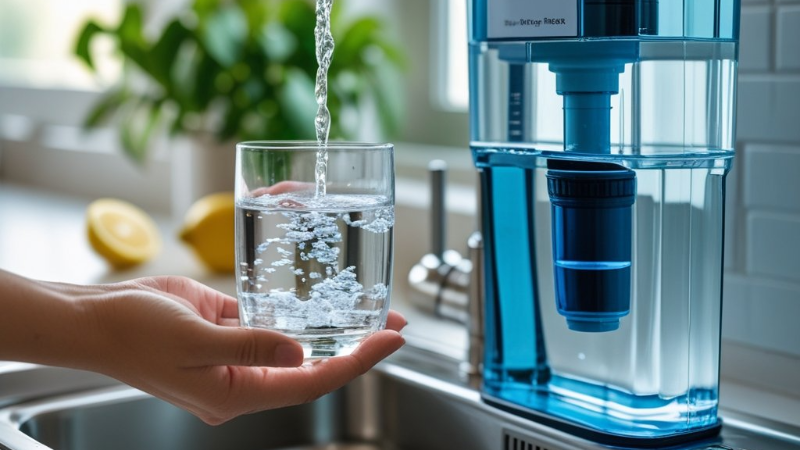
Making Tap Water More Enjoyable Without Overcomplicating It
There’s a particular kind of disappointment that comes from filling a glass of water at home and realizing it doesn’t taste quite…
Open resource →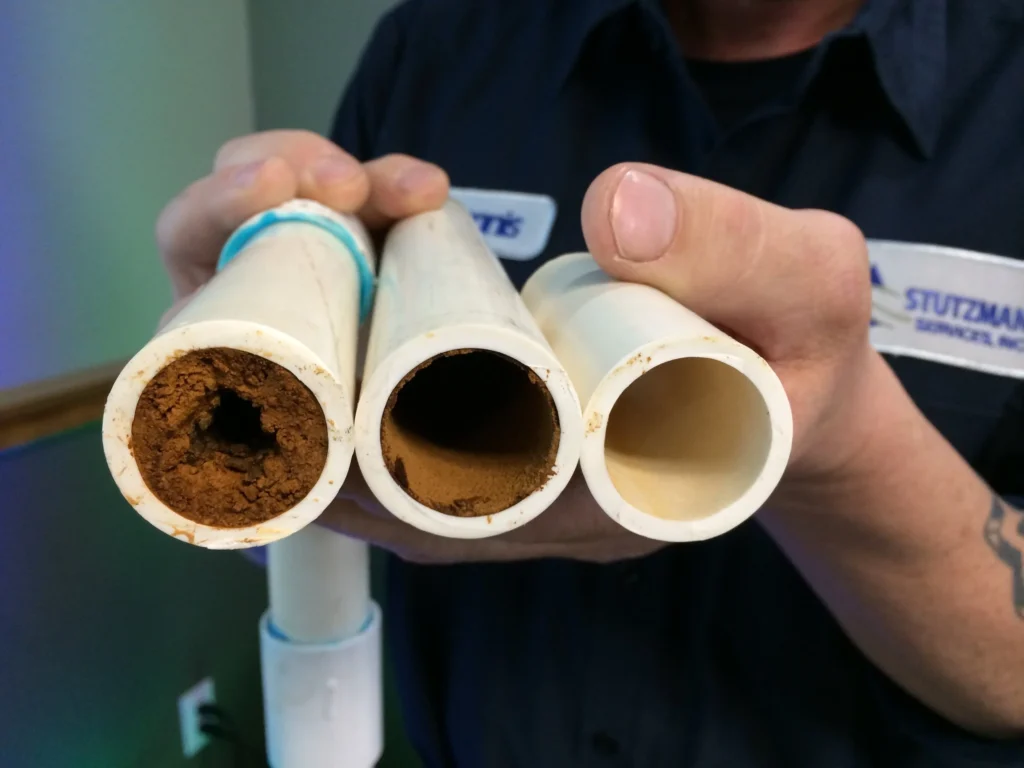
Understanding Iron, Sulfur, and Sediment in Well Water
There’s a funny thing about water: the more ordinary it looks, the less we tend to question it. Fill a glass, hold…
Open resource →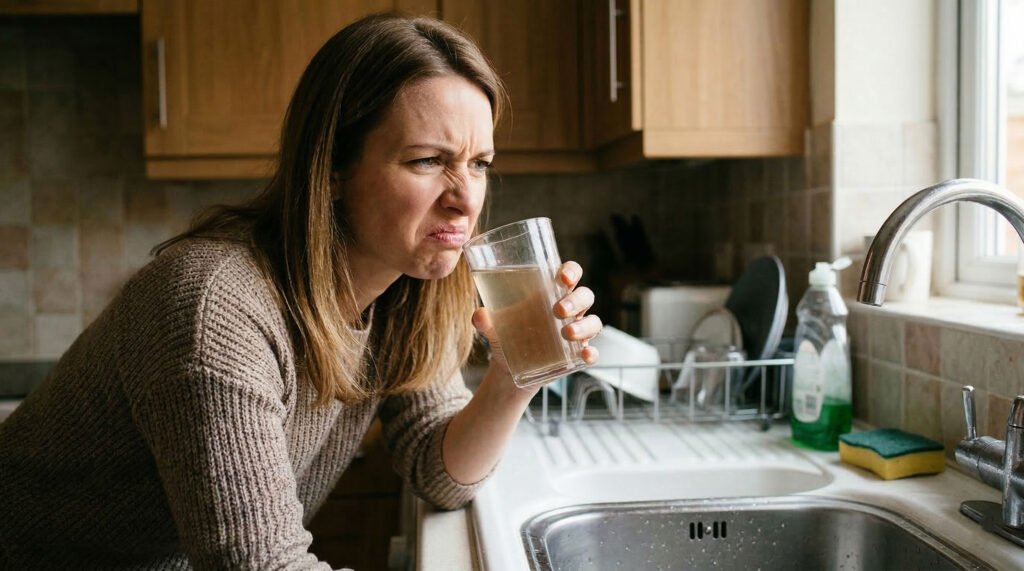
Strange Smells and Cloudy Water: What Your Well Might Be Trying to Tell You
The first time you notice something strange about your water, it’s usually a small moment. You turn on the kitchen faucet and…
Open resource →