
When Water Problems Follow You Around the House
There’s a particular kind of frustration that comes from a water problem you can’t quite explain. The water looks clear, yet the house smells faintly strange after a shower. You clean the kitchen sink, only to notice the same unpleasant scent a day later. You wash towels and they somehow don’t smell as fresh as they should.
It can make you wonder whether you’re imagining things.
Usually, you’re not.
Water can carry characteristics that are difficult to ignore, especially when the issue affects multiple fixtures. Odors, mineral deposits, sediment, and unusual tastes may have different causes, and finding the source is often more useful than trying to cover everything up with stronger cleaners or air fresheners.
The good news is that many water-quality concerns can be addressed once the cause is understood.
Start by Paying Attention to the Pattern
Before buying treatment equipment, notice where and when the problem occurs.
Does the odor come from every faucet or only one? Is it stronger when you first turn on the water? Does it become noticeable after the water has been sitting overnight? Does hot water smell different from cold water?
These details matter.
For example, an issue limited to one fixture may point toward the faucet, drain, or local plumbing rather than the home’s entire water supply. If the smell appears at every tap, the source may be farther upstream.
A sudden change is also worth noting. If your water was fine for years and then developed an odor, something may have changed in the source, plumbing, or treatment equipment.
Related resource: Making Tap Water More Enjoyable Without Overcomplicating It
Odors Can Have Several Causes
Water odors are not all the same. Some people notice a rotten-egg smell, while others describe water as earthy, musty, metallic, or chemical-like.
Hydrogen sulfide is commonly associated with a rotten-egg odor and can occur in some groundwater supplies. Organic matter can contribute earthy or musty characteristics. Plumbing materials or disinfectants can create different smells.
This is why hard-to-manage odors shouldn’t automatically be treated with the same filter.
A carbon filter may help with certain taste and odor compounds, but it isn’t designed to solve every water-quality issue. If the odor is persistent or particularly strong, testing can help identify what’s actually causing it.
Trying one filter after another without knowing the source can become an expensive experiment.
Well Water Can Require More Investigation
Private wells can have unique water-quality challenges because groundwater interacts with the surrounding soil and rock.
Iron, manganese, sulfur compounds, hardness minerals, sediment, and microorganisms can all occur depending on local conditions.
Well water can also change after heavy rainfall, flooding, changes to the well, or other environmental events. That’s why routine testing is an important part of responsible well ownership.
If an odor suddenly appears in a private well, don’t simply assume it’s harmless because the water has always been fine before.
A new smell deserves a closer look.
Related resource: Understanding Iron, Sulfur, and Sediment in Well Water
Why One Filter May Not Be Enough
Water treatment technologies are designed for specific purposes.
Sediment filters capture physical particles. Water softeners address hardness. Activated carbon can improve certain taste and odor problems. Reverse osmosis can reduce many dissolved substances. UV treatment can provide microbial disinfection under appropriate conditions.
A home with several water-quality concerns may therefore need multiple treatment stages.
That doesn’t mean the system has to become overly complicated. The goal is to use each component for a clear reason.
In fact, unnecessary equipment can create its own headaches through additional maintenance, pressure loss, replacement costs, and installation complexity.
Customization Can Make a Difference
Every house uses water differently.
A small household with relatively low water demand has different requirements from a large family with several bathrooms. A property using well water may have completely different treatment needs from a home connected to a municipal supply.
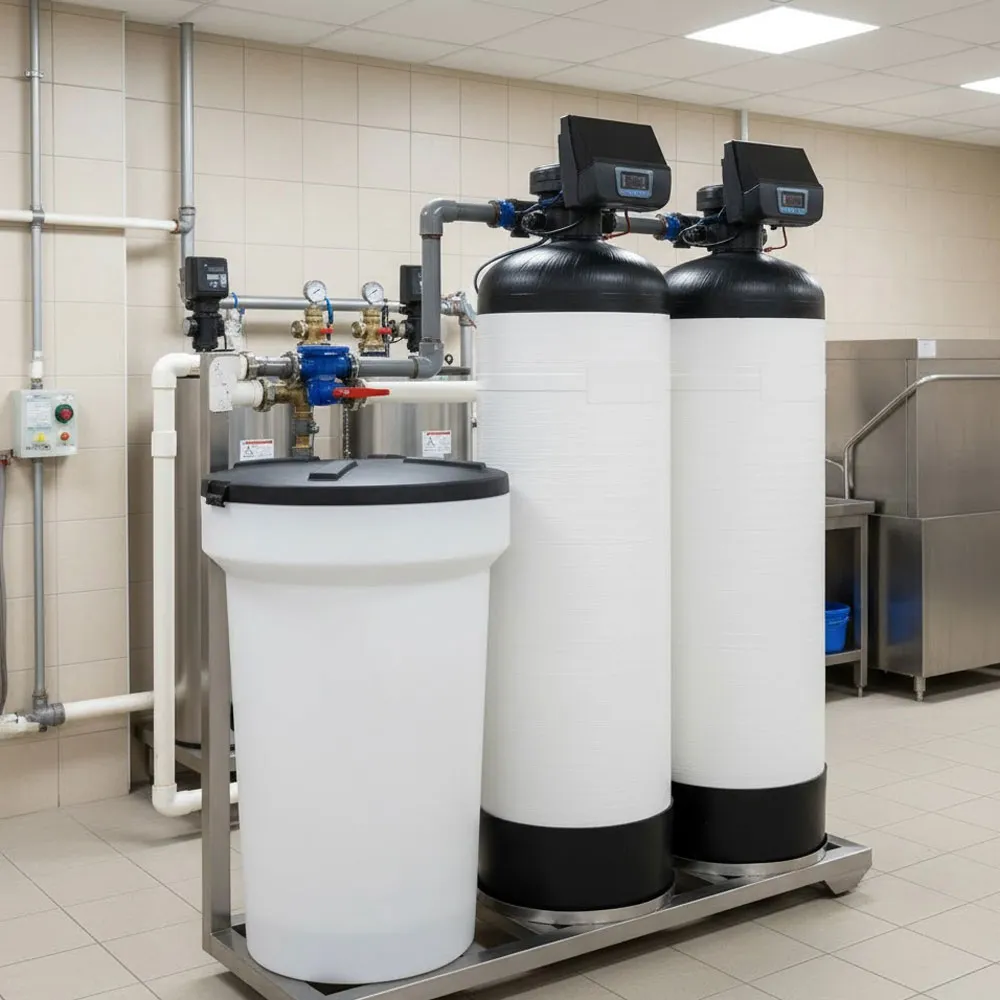
This is where customized whole-home filtration solutions can make practical sense. Instead of installing a generic collection of filters, treatment can be selected around the source water, contaminant levels, flow requirements, household usage, and desired outcome.
Customization doesn’t have to mean expensive technology.
Sometimes it means choosing the correct filter size. Sometimes it means adding pretreatment. Sometimes it means deciding that whole-house filtration isn’t necessary and that point-of-use treatment is the better option.
Related resource: Strange Smells and Cloudy Water: What Your Well Might Be Trying to Tell You
The right system is the one that fits the problem.
Think About Water Pressure Before Installation
Filtration equipment needs adequate water flow to work properly.
If a filter is too restrictive or becomes clogged, you may notice reduced pressure at showers and faucets. This can be particularly frustrating in a busy household where several fixtures are being used at once.
System sizing should therefore consider peak demand, not just average daily consumption.
A professional installer can evaluate pipe sizes, pressure, available space, drainage requirements, and the expected flow rate of the treatment equipment.
Those details aren’t exciting, but they make a difference once the system is running.
Maintenance Is Part of the Solution
Even the best treatment system won’t remain effective forever without routine care.
Filter cartridges need replacement. Carbon media eventually becomes exhausted. Softener salt needs replenishing. Other treatment components have their own service requirements.
If you don’t know what maintenance a system needs, ask before buying it.
How often are filters changed? What does replacement cost? Can the homeowner do basic maintenance? Does the system require professional service?
Related resource: A Closer Look at the Small Details Behind Better Drinking Water
These questions can tell you as much about the practical value of a system as its initial purchase price.
Don’t Cover Up a Problem You Should Investigate
Air fresheners and cleaning products can make a room smell better temporarily, but they don’t solve a water-quality problem.
If a sink or shower repeatedly develops an unpleasant smell, clean the drain and fixture first. If the issue remains, investigate the water itself.
Likewise, if water tastes metallic or unusual, consider whether the problem affects one fixture or the whole property.
Small observations can prevent unnecessary spending.
Whole-Home Treatment Isn’t Always the Answer
Whole-house treatment can be excellent when the water problem affects the entire property. But not every household needs it.
If the only concern is drinking-water taste, an under-sink filter may be enough. If the problem is hard water, a softener may be more appropriate than a general filtration system. If the concern is sediment from a well, a dedicated sediment filter might solve the problem.
The right treatment depends on what the water test shows.
More equipment doesn’t automatically mean better water.
Think Beyond Today’s Problem
A water-treatment system is usually a long-term investment. It makes sense to consider what the household might need several years from now.
Related resource: What Your Drinking Water Is Telling You About Its Quality
Will water demand change? Are you planning renovations? Could another bathroom be added? Is the well likely to require additional treatment? Are replacement parts readily available?
Planning ahead can prevent an undersized system from becoming a problem later.
Good treatment isn’t just about solving today’s inconvenience. It can provide long-term protection for plumbing, appliances, and the overall water-use experience when the equipment is properly selected and maintained.
A Better Way to Approach Persistent Water Problems
When water problems seem to follow you from room to room, the instinct is often to find the quickest filter available.
Slow down instead.
Observe the symptoms. Identify where they occur. Test the water when appropriate. Consider the source and plumbing. Then choose treatment based on what you actually find.
That’s a much calmer—and usually more economical—way to deal with water quality.
You don’t need a system with every possible feature. You need one that solves the problems your home actually has.
Once the cause is understood and the treatment is properly matched, water becomes pleasantly unremarkable again. No strange smells, no constant scrubbing, no wondering what’s going on every time you turn on the tap.
And really, that’s the goal: water that simply works.
Related Posts
Making Tap Water More Enjoyable Without Overcomplicating It
There’s a particular kind of disappointment that comes from filling a glass of water at home and realizing it doesn’t taste quite…
Open resource →
Understanding Iron, Sulfur, and Sediment in Well Water
There’s a funny thing about water: the more ordinary it looks, the less we tend to question it. Fill a glass, hold…
Open resource →
Strange Smells and Cloudy Water: What Your Well Might Be Trying to Tell You
The first time you notice something strange about your water, it’s usually a small moment. You turn on the kitchen faucet and…
Open resource →