
Making Everyday Water Better Starts With Knowing What It Needs
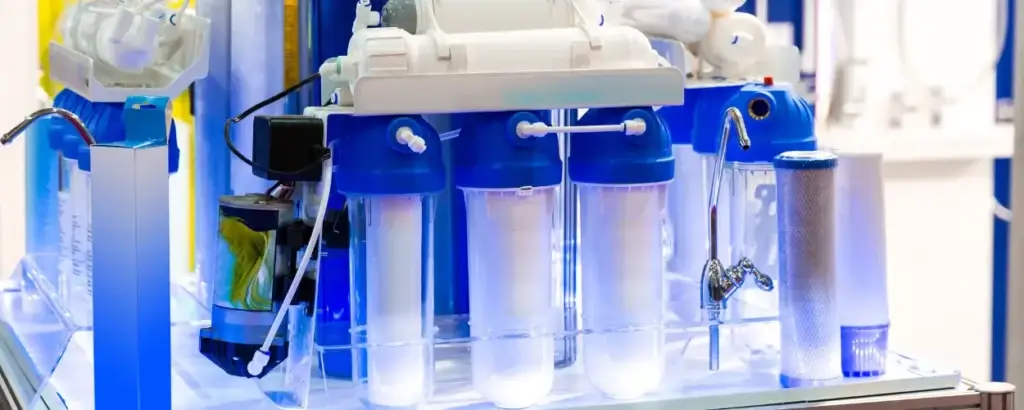
Water has a funny way of becoming noticeable only when something about it isn’t quite right. You fill a glass and catch a faint chemical taste. The shower leaves spots on the door. A cup of tea tastes strangely flat. Then you start wondering whether the issue is the water itself or something happening somewhere inside the plumbing.
Usually, the answer isn’t as complicated as it first seems.
Household water can contain naturally occurring minerals, treatment chemicals, sediment, and other substances depending on its source and local conditions. Some are mostly nuisances. Others may require targeted testing and treatment.
The trick is knowing which is which.
Instead of automatically buying the latest filtration equipment, it makes more sense to understand the water first. Once you know what you’re dealing with, choosing a treatment system becomes much less of a guessing game.
Start With the Source
Water entering your home may come from a municipal supply, a private well, or another community source. Each has different characteristics.
Municipal systems generally disinfect water before it reaches your home. Well water, meanwhile, can be influenced by local soil, rock, groundwater conditions, nearby land use, and the condition of the well itself.
That doesn’t mean one source is automatically better than another. It means the treatment needs may be different.
If your water has changed recently, that’s especially worth investigating. A new odor, color, taste, or sediment level shouldn’t simply be covered up with a filter without considering why the change occurred.
Why De-Chlorination May Improve Taste
Chlorine plays an important role in public water treatment because it helps control microorganisms as water moves through a distribution system.
Still, some homeowners don’t enjoy the taste or smell.
Related resource: Making Tap Water More Enjoyable Without Overcomplicating It
A properly selected de-chlorination filter can reduce chlorine and improve the sensory qualities of treated water. Activated carbon is commonly used for this purpose because it can adsorb chlorine and certain compounds responsible for unpleasant tastes and odors.
The key word here is “selected.”
Not every carbon filter performs identically, and performance depends on factors such as water flow, contact time, carbon quality, and filter condition.
If chlorine taste is your main complaint, testing and professional advice can help determine whether carbon filtration is enough or whether something else is happening.
Water Purifiers Aren’t All the Same
The phrase water purifiers covers a surprisingly broad range of equipment.
Some systems focus on sediment. Others use activated carbon. Reverse osmosis systems reduce many dissolved substances. Ultraviolet systems are designed for disinfection rather than mineral removal.
Because these technologies do different jobs, the word “purifier” alone doesn’t tell you much.
When comparing systems, ask what the equipment is actually designed to reduce or remove. Look at the manufacturer’s performance claims, maintenance requirements, flow rate, and installation needs.
It’s better to understand one system thoroughly than to buy something simply because its product description sounds impressive.
Testing Takes the Guesswork Out
Your senses are useful for noticing that something has changed, but they’re not laboratory instruments.
Water can taste fine while containing dissolved substances you can’t detect. Conversely, water can taste unpleasant because of something relatively harmless, such as chlorine or naturally occurring minerals.
A water test can provide a much clearer picture.
Related resource: Understanding Iron, Sulfur, and Sediment in Well Water
Depending on the source and concerns, testing may examine hardness, pH, iron, manganese, dissolved solids, nitrates, bacteria, or other characteristics.
The results help determine which treatment options make sense.
And there’s a financial benefit to this approach, too. Why spend money treating something that isn’t actually a problem?
Hard Water Can Be a Daily Irritation
Hardness comes primarily from calcium and magnesium dissolved in water.
At higher levels, those minerals can leave scale on faucets, showerheads, glassware, and appliances. Soap may also behave differently, leaving you using more product than you’d like.
A water softener can reduce hardness throughout a home when the water conditions are appropriate.
You’ll often notice the difference through small things: less scrubbing, fewer deposits, cleaner-looking fixtures.
It’s not exactly the kind of upgrade people brag about at dinner parties, but you’ll probably appreciate it every day.
Conditioned Water Has Practical Benefits
When a treatment system reduces a specific water-quality issue, the resulting conditioned water can make everyday household tasks easier.
The benefits depend on the treatment being used. Softening can reduce hardness. Carbon filtration may improve taste and odor. Other technologies can target specific dissolved substances.
The important part is that conditioning should be based on actual water conditions rather than a generic promise.
If your water has multiple issues, a combination of treatment technologies may be more appropriate than relying on one device to handle everything.
Related resource: Strange Smells and Cloudy Water: What Your Well Might Be Trying to Tell You
Drinking Water May Need Different Treatment
The water used for bathing doesn’t necessarily need to receive exactly the same treatment as the water you drink.
For example, a homeowner might use whole-house treatment to address hardness and then install a point-of-use drinking-water system in the kitchen.
Reverse osmosis is often considered when testing identifies dissolved substances that call for more extensive reduction. Carbon filtration can be useful when taste and odor are the primary concerns.
The best choice depends on the water and what you’re trying to improve.
“Great Tasting” Water Is About More Than One Filter
Everyone has a slightly different idea of what great tasting water should taste like.
Some people want completely neutral water. Others prefer water with a natural mineral character. Some simply want to eliminate chlorine or metallic notes.
That’s why taste is subjective, while water testing is objective.
You can use taste as a reason to investigate, but don’t use it as the only measure of water quality.
A filtration system should improve the characteristics you care about while still being appropriate for the water chemistry entering your home.
Installation Matters More Than People Think
Even a good treatment system can underperform when installation is rushed.
Water pressure, plumbing configuration, drainage, electrical requirements, and available space all need to be considered.
Future maintenance should also be part of the plan.
Related resource: A Closer Look at the Small Details Behind Better Drinking Water
Filters need to be accessible. Valves should be reachable. Connections should be installed securely. If equipment is tucked into an impossible corner, routine maintenance can quickly become something you keep putting off.
A good installation makes the system easier to live with, not just easier to install.
Maintenance Is Part of Water Treatment
Filters don’t last forever.
Carbon media eventually becomes exhausted. Sediment cartridges become loaded. Reverse osmosis membranes need replacement. Softening equipment requires ongoing attention.
Following the recommended maintenance schedule helps keep the system performing as intended.
Keep track of when filters are changed, especially if the system is used heavily.
And if the water suddenly tastes different after months of normal operation, don’t ignore it. The filter may be overdue, or the incoming water may have changed.
Think About the Long-Term Cost
A treatment system’s purchase price is only part of its cost.
Consider replacement filters, membranes, salt, electricity, servicing, and installation. Some systems require more attention than others.
A slightly more expensive system may prove worthwhile if replacement parts are readily available and maintenance is straightforward.
But expensive doesn’t automatically mean better.
A simple system that solves the actual problem can be a smarter investment than an elaborate setup packed with features you don’t need.
Related resource: What Your Drinking Water Is Telling You About Its Quality
Choose Treatment With a Reason
The best water-treatment decisions usually start with a very ordinary question: what’s actually happening with my water?
Test it. Understand the source. Identify the problem. Then choose technology that addresses that problem.
If chlorine taste is the concern, carbon treatment may be enough. If hardness is creating scale, softening may help. If testing reveals dissolved substances or other specific concerns, a more specialized approach may be appropriate.
There’s no need to make water treatment more complicated than it has to be.
Better Water Should Feel Ordinary
A good treatment system eventually becomes part of the background.
You stop thinking about it when you fill a glass. You notice fewer deposits around the faucet. Your coffee tastes more consistent. The shower is easier to clean.
Those aren’t dramatic changes, but they’re meaningful ones.
The goal isn’t to own the most sophisticated equipment on the market. It’s to have water that suits your household and a treatment system that you can realistically maintain.
Start with knowledge rather than assumptions, choose equipment for a clear reason, and keep up with maintenance.
Then let the system do its job quietly.
After all, the best water treatment is often the kind you don’t have to think about at all.
Related Posts
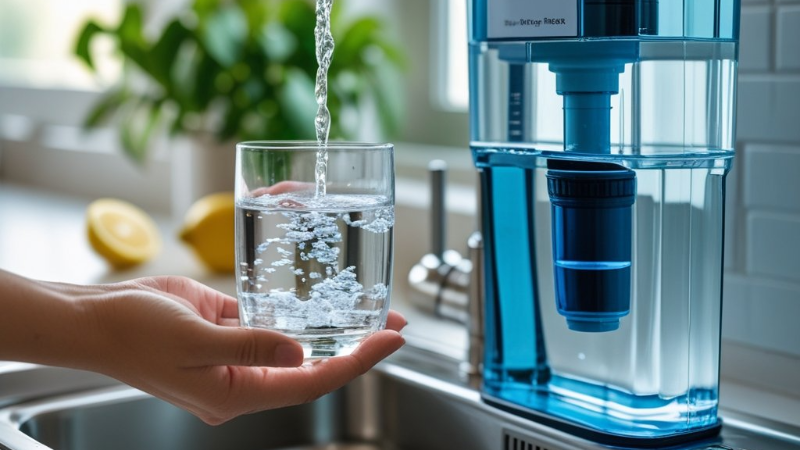
Making Tap Water More Enjoyable Without Overcomplicating It
There’s a particular kind of disappointment that comes from filling a glass of water at home and realizing it doesn’t taste quite…
Open resource →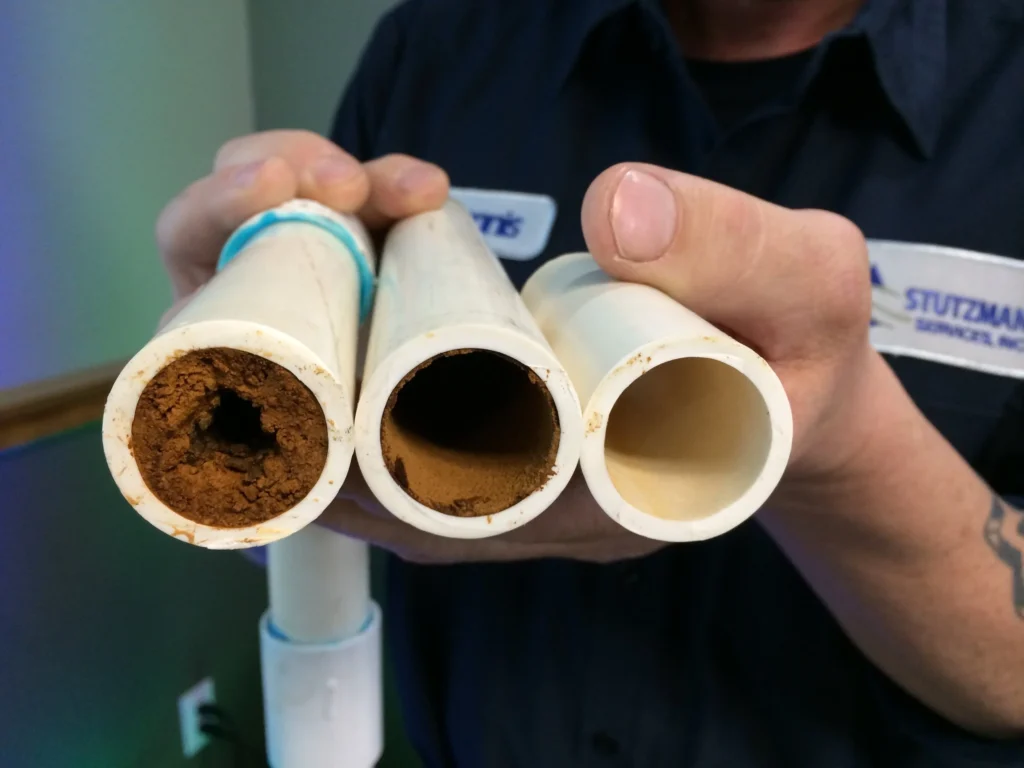
Understanding Iron, Sulfur, and Sediment in Well Water
There’s a funny thing about water: the more ordinary it looks, the less we tend to question it. Fill a glass, hold…
Open resource →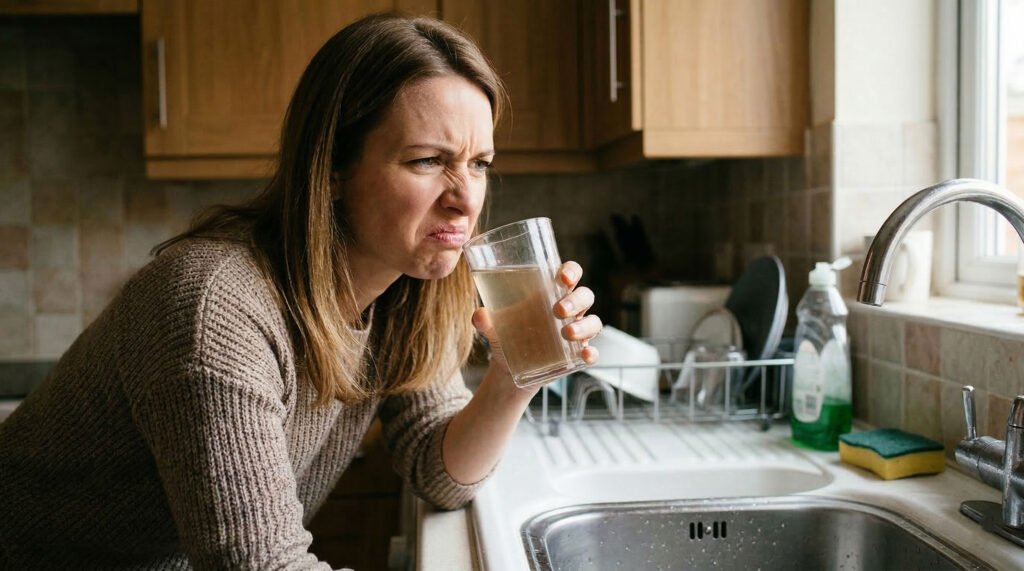
Strange Smells and Cloudy Water: What Your Well Might Be Trying to Tell You
The first time you notice something strange about your water, it’s usually a small moment. You turn on the kitchen faucet and…
Open resource →