
A Closer Look at the Small Details Behind Better Drinking Water
Most people don’t think about filtration technology while pouring a glass of water. They think about whether it tastes good, whether there’s an odd smell, or whether the family can finally stop buying cases of bottled water every other week.
Fair enough. Water treatment isn’t exactly dinner-table conversation.
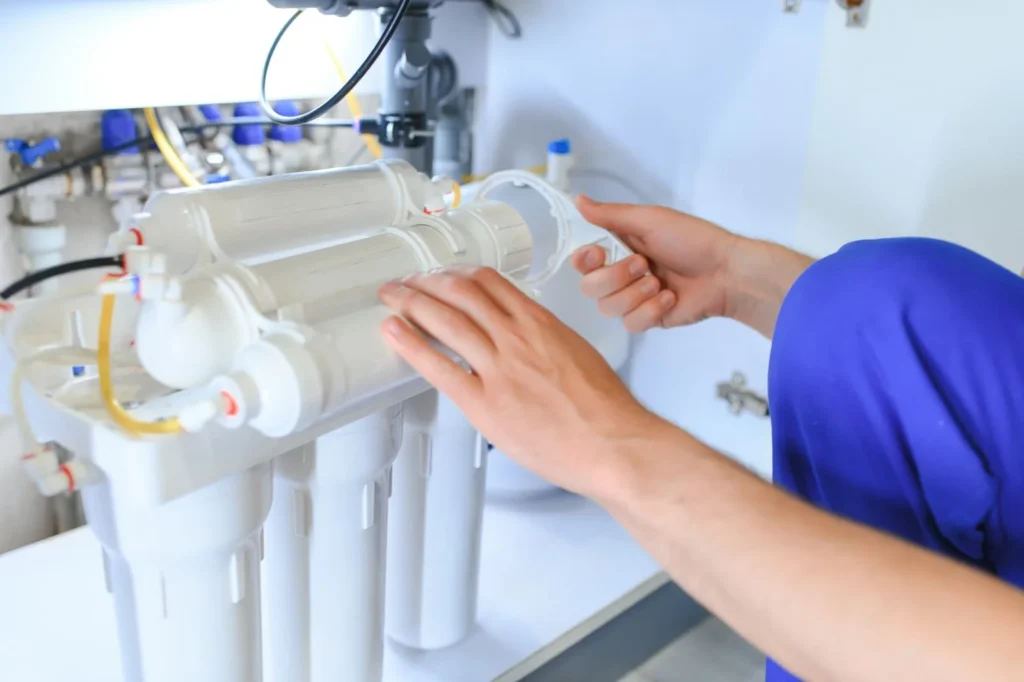
Still, the technology sitting underneath the kitchen sink can be surprisingly sophisticated. Reverse osmosis, for example, relies on several stages that work together rather than one magical filter doing everything. Understanding those stages can make it easier to choose equipment that suits your home instead of simply picking the system with the longest feature list.
The first question is fairly straightforward: what are you trying to improve?
Start With the Location of the Problem
If your concern is limited to drinking and cooking water, you may not need to treat every gallon entering the house.
That’s where point of use systems can make practical sense. These systems treat water at or near the location where it will actually be consumed, such as a kitchen faucet.
The approach can be convenient and economical because treatment is concentrated where it’s most useful. Instead of installing a large whole-home setup, homeowners can focus on a specific source.
Of course, the right choice depends on the water concern. If sediment, hardness or another issue is affecting showers, laundry and appliances throughout the property, point-of-use treatment alone won’t address the entire situation.
The Membrane Does the Heavy Lifting
Reverse osmosis is built around a component that sounds complicated but has a fairly simple purpose.
A semipermeable membrane acts as a selective barrier. Under pressure, water passes through the membrane while many dissolved substances and other impurities are reduced from the treated stream.
The membrane is incredibly important, but it shouldn’t be viewed as a standalone solution.
In a properly designed system, other filtration stages usually protect and support it. That’s because incoming water can contain particles or chemicals that may reduce membrane performance or shorten its useful life.
Related resource: Making Tap Water More Enjoyable Without Overcomplicating It
Think of the membrane as the central player on a team. It can do a lot, but it still needs the rest of the team around it.
Why Pre-Filtration Matters
Before water reaches the reverse osmosis membrane, it often passes through one or more pre-filters.
These stages can serve different purposes depending on the equipment. A sediment filter may capture particles, while carbon filtration can reduce certain chlorine and taste-related compounds.
Protecting the membrane is a major reason for this arrangement.
If larger particles or certain chemicals reach the membrane without adequate protection, performance can suffer. Filters can become clogged, membranes may degrade more quickly, and the system may produce treated water more slowly.
The exact filter configuration varies between systems, so it’s worth checking what each stage is designed to accomplish.
Pressure Is Part of the Process
Reverse osmosis doesn’t work simply because water happens to touch a membrane.
Pressure is required.
The system uses incoming water pressure to push water through the membrane against the natural movement caused by dissolved substances. If the available pressure is too low, production can become slower and performance may be affected.
This is one reason professional installation can be valuable.
Before installing an RO system, pressure, plumbing connections, drain requirements and available cabinet space should all be considered.
A beautiful system won’t be very useful if it takes forever to fill a glass.
Not All Water Starts in the Same Place
The source of your water matters.
Related resource: Understanding Iron, Sulfur, and Sediment in Well Water
Municipal water may contain disinfectants and naturally occurring minerals. Private well water can have different challenges, including hardness, iron, sediment or changes in chemistry.
Two homes on the same street can even have different experiences depending on plumbing and local conditions.
Testing provides a more useful starting point than assuming your water has the same characteristics as everyone else’s.
Once the water has been evaluated, treatment can be selected with greater confidence.
Sediment Can Be a Bigger Deal Than It Looks
Particles in incoming water may seem harmless, especially when they’re small.
But sediment can clog filters, reduce flow and interfere with equipment.
If a household has a high sediment load, the filtration system may need appropriate pre-treatment before water reaches finer filtration stages.
This is particularly relevant for some private wells, where sand or other particles may enter the water supply.
The solution isn’t always the finest filter available. A very restrictive filter can create pressure and maintenance problems if the system isn’t designed for it.
Good filtration balances particle removal with practical flow.
What About Hard Water?
Hard water contains calcium and magnesium. Those minerals can contribute to scale on fixtures and appliances.
Reverse osmosis can reduce many dissolved substances, but an under-sink RO system isn’t necessarily the best way to address a whole-house hardness problem.
If hardness is significant, a separate softening or conditioning strategy may be appropriate.
Related resource: Strange Smells and Cloudy Water: What Your Well Might Be Trying to Tell You
This is an important distinction because homeowners sometimes expect one device to handle every water-quality concern.
Treatment works better when each component has a clear job.
Maintenance Isn’t Optional
Filtration systems need attention eventually.
Pre-filters become loaded with sediment or exhausted by the substances they are designed to reduce. Carbon cartridges have service lives. RO membranes also require replacement at intervals based on system design and water conditions.
A neglected system can experience slower production, declining performance or changes in taste.
The good news is that maintenance is usually predictable.
Keep track of filter-change dates. Follow the manufacturer’s recommendations. If you’re unsure about a particular component, ask a qualified professional rather than guessing.
Five minutes of routine attention can prevent a much bigger headache later.
Water Efficiency Deserves a Look
Traditional reverse osmosis systems can send some water down the drain during the treatment process.
That doesn’t mean RO is inherently wasteful. System efficiency varies, and newer designs may use water more efficiently than older equipment.
Still, homeowners should ask about the recovery ratio and reject-water volume before purchasing.
If conserving water is important to you, compare actual specifications between models.
Related resource: What Your Drinking Water Is Telling You About Its Quality
It’s another example of why the fine print can be more useful than the front of the brochure.
Tank or Tankless?
Many under-sink RO systems use storage tanks, while newer designs may use tankless configurations.
A storage tank keeps treated water available for use, while tankless systems can offer a smaller footprint and different production characteristics.
Your cabinet space may influence the decision.
So might household demand. A family that frequently fills large bottles may have different requirements than someone who uses the filtered faucet mainly for drinking glasses and coffee.
There’s no universally perfect format.
Don’t Ignore the Faucet
The faucet is the part of the system you actually interact with.
Choose something comfortable, durable and appropriate for your kitchen layout. The installation should also leave enough room underneath the sink for filter replacement and service.
This sounds like a minor detail until you’re trying to change a cartridge with one hand because the plumbing is blocking the other.
Convenience matters.
Choose Treatment Based on Evidence
The best filtration decision starts with information.
Know your water source. Understand the main concerns. Test when appropriate. Learn what each stage of the system is designed to do.
Don’t assume that a more expensive unit automatically provides better results.
Related resource: Making Well Water Better: Practical Treatment for the Problems You Can Actually See
Instead, look at performance claims, certifications where relevant, maintenance requirements, replacement costs, water efficiency and installation needs.
And ask questions. A reputable water-treatment professional should be able to explain the system without burying you in technical language.
The Goal Is Simple, Even If the Technology Isn’t
Reverse osmosis technology can sound intimidating when you first encounter terms like membrane, pressure, recovery and filtration stages.
But the reason people install these systems is very ordinary.
They want water that tastes better. They want a convenient source for drinking and cooking. They want to feel confident about the water coming from the kitchen faucet.
That’s really the heart of it.
A well-designed system combines several relatively simple ideas — appropriate pre-filtration, a properly functioning membrane, suitable pressure and regular maintenance — into one useful household tool.
You don’t need to become an expert in filtration to benefit from it.
You just need to understand what your water needs, choose equipment that fits those needs, and take care of it once it’s installed.
After that, the best part is almost boring.
Turn on the faucet. Fill the glass. Drink.
And get on with your day.
Related Posts
Making Tap Water More Enjoyable Without Overcomplicating It
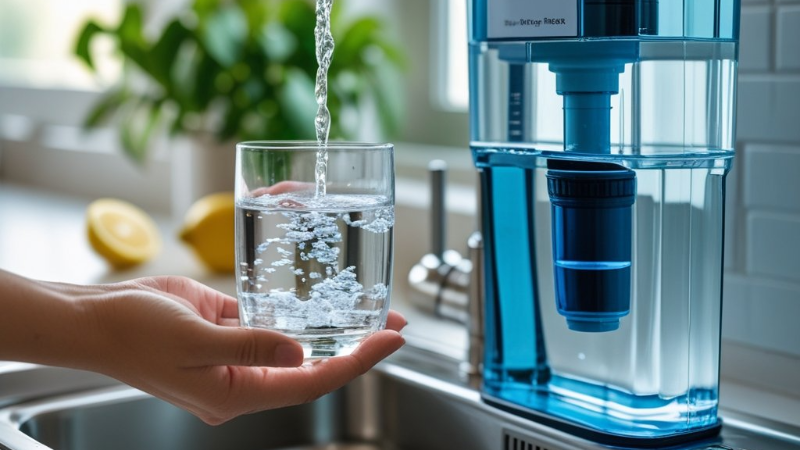
There’s a particular kind of disappointment that comes from filling a glass of water at home and realizing it doesn’t taste quite…
Open resource →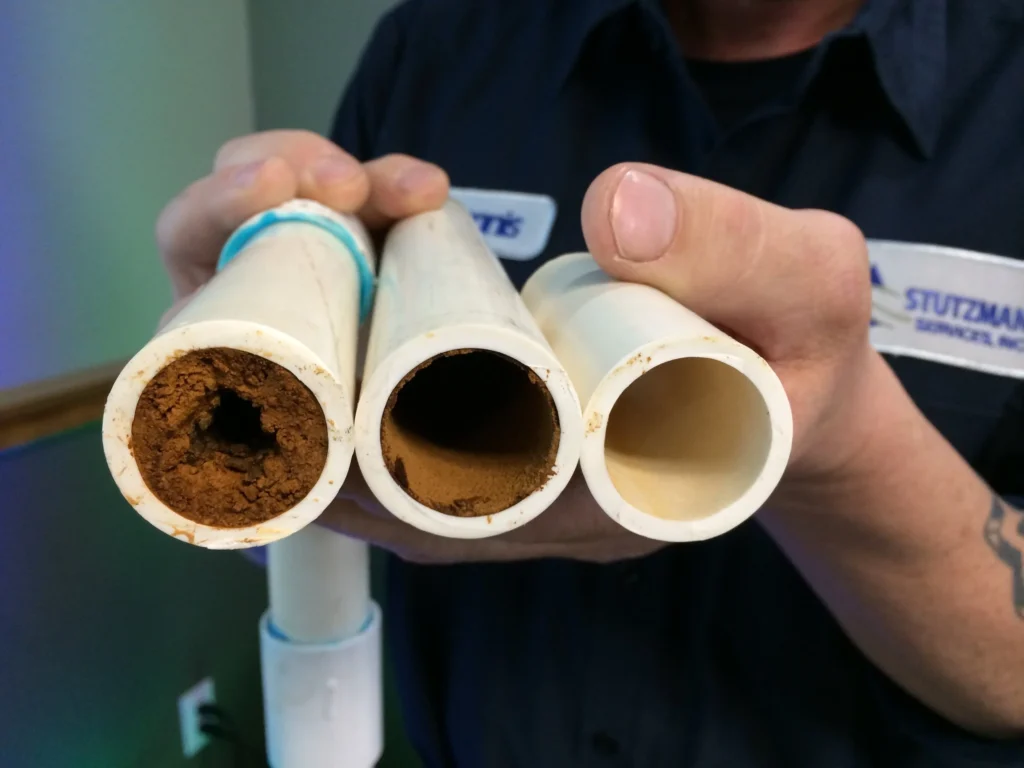
Understanding Iron, Sulfur, and Sediment in Well Water
There’s a funny thing about water: the more ordinary it looks, the less we tend to question it. Fill a glass, hold…
Open resource →
Strange Smells and Cloudy Water: What Your Well Might Be Trying to Tell You
The first time you notice something strange about your water, it’s usually a small moment. You turn on the kitchen faucet and…
Open resource →