
City Water or Well Water? Start With What Your Home Actually Needs
Water is one of those everyday things most people only notice when it behaves differently than expected. A strange taste in morning coffee. A rusty-looking stain near the sink. White scale around the showerhead. Maybe the water smells a little like chlorine, or perhaps it has an earthy odor after heavy rain.
The source of your water can have a lot to do with those experiences.
Homes supplied by a municipal utility and homes relying on a private well don’t necessarily face the same water-quality challenges. That doesn’t mean one source is automatically better than the other. It simply means the right treatment approach depends on what’s actually coming through your pipes.
Before spending money on filters or treatment equipment, it’s worth taking a closer look at the water itself.
City Water Comes With Its Own Characteristics
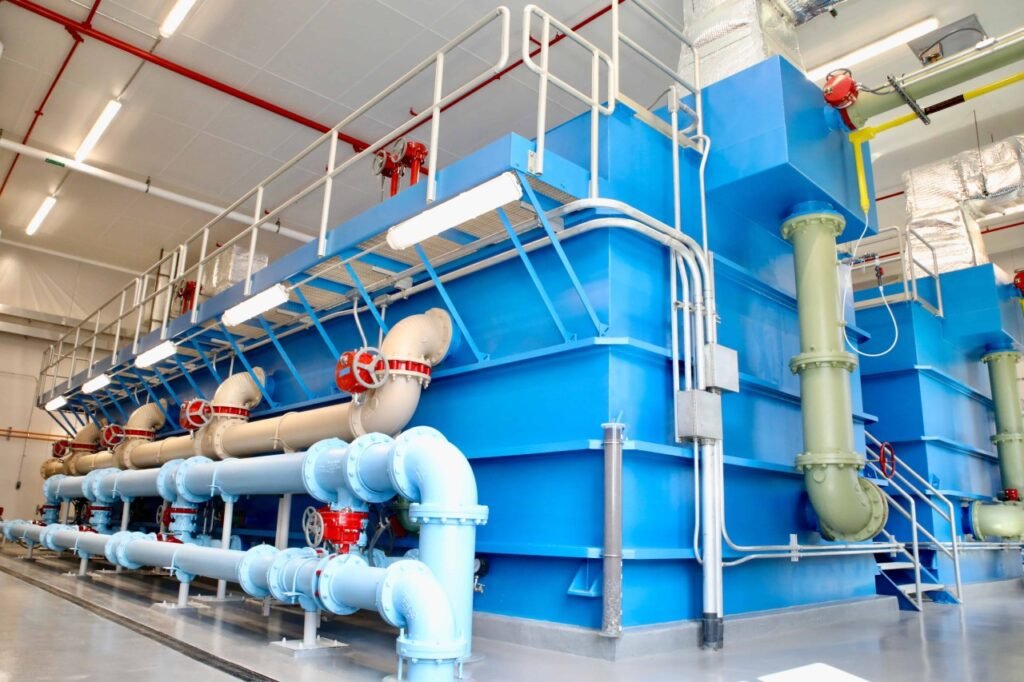
Most homes connected to a municipal supply receive water that has already undergone treatment before reaching the property.
That can provide an important layer of protection, but the water may still contain characteristics homeowners notice. Disinfectants such as chlorine can affect taste and odor. Minerals can contribute to hardness and scale. Aging household plumbing can also influence what comes out of the tap.
The quality of city water can vary from one community to another, and even the experience inside a home may differ depending on plumbing and local conditions.
A municipal water report can provide useful background information, but testing at the home can sometimes offer a more complete picture of what you’re actually experiencing at the tap.
Well Water Deserves a Closer Look
Private wells operate differently.
Instead of coming from a centralized treatment facility, the water comes from an underground source. Its characteristics depend on local geology, the well itself, surrounding conditions, and other factors.
Some households notice hardness. Others may encounter iron staining, sulfur-like odors, sediment, or changes in appearance.
Well water isn’t automatically unsafe or poor quality. Many households use it successfully for years. But private wells generally place more responsibility on the homeowner for testing and understanding the water.
Related resource: Making Tap Water More Enjoyable Without Overcomplicating It
Regular testing can help identify changes before they become bigger concerns.
Testing Is the Sensible First Step
It’s tempting to choose a treatment system based on a symptom.
Brown stains? Buy an iron filter.
Bad taste? Install carbon.
Hard water? Get a softener.
Sometimes those assumptions are correct. Sometimes they’re not.
Water testing can provide a much clearer picture. Depending on the source and concerns, testing may examine hardness, pH, iron, manganese, bacteria, dissolved substances, sediment, and other characteristics.
Once you know what’s present, you can choose treatment based on evidence rather than guesswork.
That approach usually makes more sense financially, too.
One Filter Doesn’t Do Everything
The phrase “water filter” can mean almost anything, which is why homeowners should look beyond the label.
Different technologies are designed for different jobs.
Sediment filters capture particles. Carbon filtration can reduce certain tastes, odors, and organic compounds. Water softeners address hardness minerals. Reverse osmosis can reduce many dissolved substances. Ultraviolet systems may be used for microbial disinfection in suitable applications.
A water filtration system should therefore be selected according to the specific characteristics of the water.
Related resource: Understanding Iron, Sulfur, and Sediment in Well Water
There isn’t a universal cartridge that removes everything.
If a company tells you that one piece of equipment solves every possible water problem, it’s reasonable to ask for more details.
Hard Water Is a Separate Issue
Hardness is one of the most common reasons homeowners explore treatment.
Calcium and magnesium in water can form scale on faucets, showerheads, appliances, and water heaters. Soap can also react with hardness minerals, making it harder to rinse away cleanly.
A water softener can reduce these minerals through ion exchange.
But softening shouldn’t be confused with filtration. If your main concern is a chlorine taste or a particular dissolved substance, a softener may not solve it.
Likewise, a standard filter may not be the right answer for significant hardness.
The distinction is simple once you understand it: treat the problem you actually have.
What Happens Inside the Plumbing?
Water quality isn’t just about the glass sitting on your kitchen counter.
The water running through your home affects plumbing fixtures and appliances, too.
Hardness can contribute to mineral deposits. Sediment can collect in fixtures and filters. Certain water conditions can leave staining or affect the appearance of sinks and tubs.
This is why some homeowners choose whole-home treatment rather than focusing exclusively on drinking water.
The right decision depends on what needs attention. If the problem affects showers, laundry, and appliances as well as drinking water, a point-of-use filter may not be enough.
Related resource: Strange Smells and Cloudy Water: What Your Well Might Be Trying to Tell You
Drinking Water Can Be Treated Separately
Not every gallon of household water needs the same level of treatment.
A family may want to manage hardness throughout the house while also wanting additional treatment for drinking and cooking water.
That’s where point-of-use systems can be useful.
A kitchen-based reverse osmosis system, for example, can provide treated water through a dedicated faucet. Carbon filtration may be sufficient in other situations, especially when the primary concern is taste and odor.
The advantage of targeted treatment is straightforward: you’re applying specialized technology where it’s actually needed.
Water Pressure Matters More Than People Expect
Adding filtration equipment changes the plumbing system.
Filters create some resistance as water passes through them. As a filter collects sediment, that resistance can increase.
Reverse osmosis systems also depend on adequate pressure to produce treated water effectively.
If your home already has low pressure, the issue should be considered before installation. A professional can evaluate whether the selected equipment is appropriate or whether additional equipment, such as a booster pump, may be needed.
Nobody wants to install a new system and discover that the kitchen faucet now trickles.
Maintenance Keeps Treatment Effective
Water filtration isn’t a “set it and forget it” solution.
Filters eventually become loaded. Softener salt needs attention where applicable. RO membranes require periodic replacement. UV systems rely on proper lamp maintenance.
Related resource: A Closer Look at the Small Details Behind Better Drinking Water
A maintenance schedule doesn’t need to be complicated.
Keep track of installation dates and filter changes. Pay attention to changes in taste, odor, pressure, or water appearance. If something suddenly changes, investigate it.
Sometimes a filter is simply overdue for replacement. Other times, a change in water quality points to a larger issue.
Either way, early attention is usually easier.
Don’t Over-Treat Your Water
There is a tendency to believe that more equipment means better water.
Not necessarily.
Every additional treatment stage adds cost, maintenance, space requirements, and sometimes pressure loss. If a component isn’t addressing a known problem, it may provide little practical benefit.
Start with the basics.
What is in the water? What bothers you about it? Is the concern cosmetic, related to taste, associated with hardness, or something that requires more specialized treatment?
The answers should determine the equipment.
City and Well Homes Can Both Have Good Water
It’s easy to turn water sources into a simple competition: municipal versus private well.
In reality, both can provide perfectly usable household water when properly managed.
Municipal water benefits from centralized treatment and monitoring, while well owners have more direct responsibility for testing and treatment. Neither source eliminates the need to understand what’s coming out of the tap.
Related resource: What Your Drinking Water Is Telling You About Its Quality
Water quality is ultimately about the water itself, not simply the label attached to its source.
Think About the Long-Term Cost
When comparing treatment systems, look beyond the purchase price.
Consider replacement filters, salt, electricity, water consumption, maintenance, repairs, installation, and expected equipment life.
A cheaper system can become expensive if replacement parts are costly or difficult to obtain. An expensive system isn’t automatically better if most of its features aren’t relevant to your water.
Ask about ongoing costs before making a decision.
Good water treatment should fit both your plumbing and your budget.
Better Treatment Starts With Better Information
The smartest approach to household water is surprisingly straightforward.
Test it. Understand the source. Identify the actual problems. Then choose treatment technology that addresses those problems without adding unnecessary complexity.
Whether your home receives municipal water or relies on a private well, the same principle applies: don’t guess when you can measure.
Once the right system is installed and maintained, the improvements may feel almost uneventful. Less scale. Better taste. Cleaner fixtures. Fewer stains. More confidence every time you turn on the faucet.
And that’s really the point.
You don’t need your water-treatment equipment to become the star of the house. You just want it quietly doing its job in the background, leaving you free to enjoy the water without constantly wondering what’s in it.
Related Posts
Making Tap Water More Enjoyable Without Overcomplicating It
There’s a particular kind of disappointment that comes from filling a glass of water at home and realizing it doesn’t taste quite…
Open resource →
Understanding Iron, Sulfur, and Sediment in Well Water
There’s a funny thing about water: the more ordinary it looks, the less we tend to question it. Fill a glass, hold…
Open resource →
Strange Smells and Cloudy Water: What Your Well Might Be Trying to Tell You
The first time you notice something strange about your water, it’s usually a small moment. You turn on the kitchen faucet and…
Open resource →