
Understanding Reverse Osmosis and the Water Coming Into Your Home
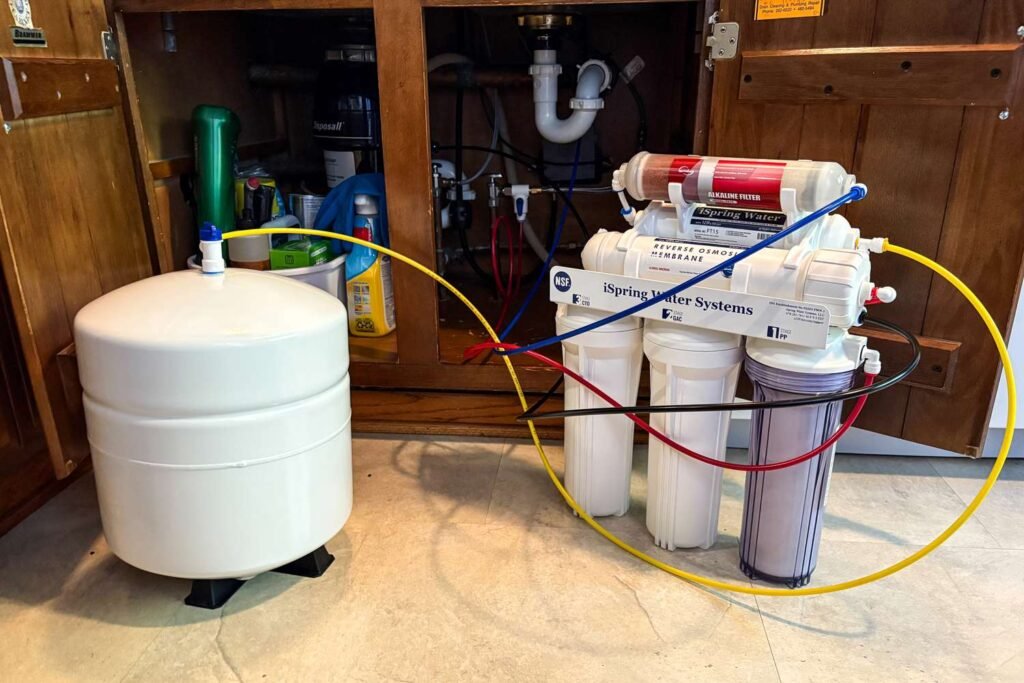
Water can look perfectly ordinary while carrying a surprisingly complicated story.
It starts at a source, moves through treatment or natural ground formations, travels through pipes, and eventually reaches the faucet in your kitchen. Along the way, its characteristics can change. That’s one reason choosing a drinking-water treatment system shouldn’t begin with a product brochure. It should begin with understanding where your water comes from and what you actually want to improve.
For many homeowners, reverse osmosis is part of that conversation. It’s a well-established membrane treatment technology, but it’s not a universal answer to every water problem. Like any treatment method, it works best when matched to the right situation.
Start With Your Water Source
The first question is surprisingly basic: where does your household water come from?
A home connected to a public utility has a different starting point from a property supplied by a private well. The source, treatment practices and potential concerns can vary considerably.
With municipal water supplies, water is generally treated before it reaches customers, but that doesn’t mean every home experiences identical water quality. Distribution piping, building plumbing and local conditions can influence what comes out of a particular faucet.
Private wells are different. The homeowner is responsible for understanding and monitoring the water quality, making testing especially important.
Knowing the source gives you context before you start choosing equipment.
What Reverse Osmosis Actually Does
Reverse osmosis uses pressure to move water through a semipermeable membrane. The membrane allows water molecules to pass while reducing many dissolved substances.
That makes it quite different from a simple sediment filter.
A sediment filter is primarily concerned with particles. Carbon filtration often focuses on chlorine, taste and odor compounds. Reverse osmosis can provide a more extensive level of treatment for certain dissolved substances.
A properly configured reverse osmosis drinking water system can therefore be useful when homeowners want highly treated water for drinking and cooking.
Related resource: Making Tap Water More Enjoyable Without Overcomplicating It
But “highly treated” doesn’t mean “automatically better for every purpose.” Treatment should still be based on actual water conditions.
Why Testing Comes First
It is easy to assume that if a neighbor has an RO system, you should have one too.
Maybe. Maybe not.
Water conditions can vary from one property to another, even within the same general area. Testing gives you a much better starting point.
Depending on the test, you may learn about hardness, pH, dissolved solids, metals, microorganisms or other characteristics. The appropriate test depends on your water source and concerns.
For municipal customers, publicly available water-quality information can also provide useful background. For well owners, laboratory testing is particularly important because groundwater conditions can change over time.
Don’t buy treatment equipment just because a salesperson says your water “probably” has a problem.
Find out.
Municipal Water Isn’t Exactly the Same as Well Water
Public water systems typically operate under regulatory requirements and treatment programs, but homeowners can still notice differences in taste or appearance.
Chlorine or chloramine used for disinfection can sometimes be noticeable. Plumbing within a building can also affect water characteristics.
A homeowner might decide that a carbon filter is enough to improve taste, while another household may have a different concern that calls for additional treatment.
That’s why even within municipal water supplies, the right solution isn’t always identical from one home to another.
Related resource: Understanding Iron, Sulfur, and Sediment in Well Water
The goal isn’t to remove everything from the water. It’s to address the things that actually need attention.
Private Wells Require More Personal Attention
A private well is essentially your own small water source, which comes with both freedom and responsibility.
Unlike a public utility system, there’s no central treatment provider continuously managing your household’s water quality.
Owners of private well water systems should generally stay on top of testing and understand the characteristics of their particular well. Groundwater can contain minerals, sediment and naturally occurring substances, and microbial contamination is another concern that should be taken seriously.
If testing identifies a specific issue, treatment can then be selected around that result.
Well water also isn’t automatically “better” or “worse” than municipal water. It is simply different, and it requires a different level of homeowner involvement.
RO Usually Works at the Point of Use
One reason reverse osmosis is popular for drinking water is that it doesn’t necessarily require treating every gallon entering the house.
A point-of-use system can be installed near a kitchen faucet and produce treated water for drinking and cooking.
That can be practical for households that don’t need whole-home treatment.
There’s little reason to run highly treated RO water through toilets, showers and garden hoses if the primary goal is simply better drinking water.
Of course, some homes have broader water-quality concerns, and those may call for whole-house treatment or a combination of technologies.
Pre-Filtration Matters
Reverse osmosis membranes aren’t intended to handle everything on their own.
Related resource: Strange Smells and Cloudy Water: What Your Well Might Be Trying to Tell You
Many RO systems use pre-filtration before water reaches the membrane. Sediment filtration can capture particles, while carbon filtration may reduce substances that could interfere with certain membrane systems.
This layered approach can improve overall system performance and help protect the membrane.
The exact configuration depends on the equipment and water chemistry. That’s another reason a professionally designed system can be preferable to buying random components and connecting them together.
Water treatment isn’t quite as simple as assembling furniture.
What Happens After the Membrane?
RO water typically needs a storage and delivery arrangement because the membrane produces treated water more slowly than an ordinary faucet delivers it.
Many residential systems therefore use a storage tank or another method of keeping treated water available when you need it.
Some systems also include a final polishing stage or dedicated faucet.
The details matter because convenience is part of the experience. If filling a glass takes forever, even excellent water treatment can become annoying.
A system should fit the way your household actually uses water.
Don’t Forget Water Pressure
Reverse osmosis depends on pressure.
If incoming pressure is too low, production can be slower and performance may suffer. If household pressure is already marginal, adding treatment equipment without considering it can lead to disappointment.
Before installation, pressure and flow should be evaluated.
Related resource: A Closer Look at the Small Details Behind Better Drinking Water
A qualified installer can also check whether the available plumbing configuration is appropriate for the equipment.
It’s not glamorous stuff, but these practical details often determine whether a system feels effortless or frustrating.
RO Isn’t a Water Softener
This distinction causes confusion.
Reverse osmosis can reduce many dissolved substances, but it isn’t a replacement for a conventional water softener when the main concern is household-wide hardness.
If your faucets are covered in mineral deposits or your water heater is experiencing scale, you may have a hardness problem that requires a different treatment approach.
Some homes use both technologies for different purposes.
The softener manages hardness throughout the house, while RO provides highly treated water at a drinking-water faucet.
There’s no contradiction there. They’re simply doing different jobs.
Maintenance Is Part of the System
An RO system isn’t maintenance-free.
Pre-filters and post-filters need replacement. Membranes have a service life. Storage tanks and other components may require inspection or sanitization depending on the equipment.
Replacement schedules vary based on the system and water use, so follow manufacturer recommendations rather than relying on a generic internet schedule.
If the water’s taste changes or production becomes unusually slow, don’t ignore it.
Related resource: What Your Drinking Water Is Telling You About Its Quality
Those can be signs that maintenance is overdue or that another part of the system needs attention.
Choosing Treatment Without Overcomplicating It
There is no prize for owning the most complicated water-treatment setup in the neighborhood.
Start with the source. Test the water. Identify the actual concern. Then choose technology that addresses it.
For some homes, a basic carbon filter may be enough. Others may benefit from reverse osmosis for drinking water. Well owners may need additional treatment depending on test results.
The important thing is matching the solution to the situation.
Water treatment works best when it’s thoughtful rather than excessive.
Better Water Starts With Better Information
The appeal of reverse osmosis is understandable. It offers a powerful way to reduce many dissolved substances and can provide highly treated water right where you drink and cook.
But technology alone isn’t the answer.
The smartest approach is to understand your source, test when appropriate, consider household needs and choose a system that can be maintained properly.
Whether your home receives utility water or relies on a private well, the same basic principle applies: know what you’re dealing with before deciding what to remove.
Once you have that information, the choices become much clearer.
And when the right system is installed, maintained and matched to your water, the result is wonderfully ordinary. You turn on the faucet, fill your glass and trust the water without giving the equipment another thought.
Related Posts
Making Tap Water More Enjoyable Without Overcomplicating It
There’s a particular kind of disappointment that comes from filling a glass of water at home and realizing it doesn’t taste quite…
Open resource →
Understanding Iron, Sulfur, and Sediment in Well Water
There’s a funny thing about water: the more ordinary it looks, the less we tend to question it. Fill a glass, hold…
Open resource →
Strange Smells and Cloudy Water: What Your Well Might Be Trying to Tell You
The first time you notice something strange about your water, it’s usually a small moment. You turn on the kitchen faucet and…
Open resource →